Thad Beaumont publicly reveals George Stark's true identity
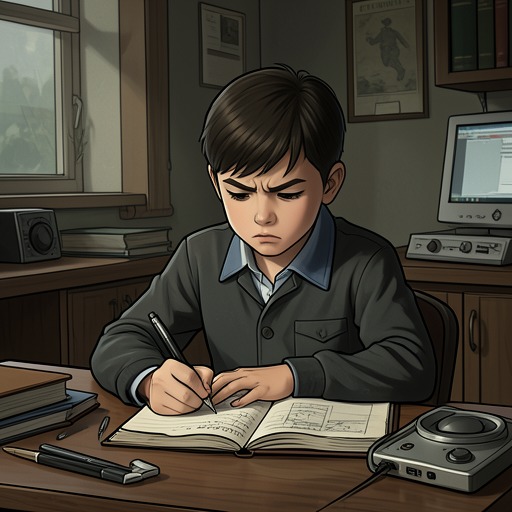
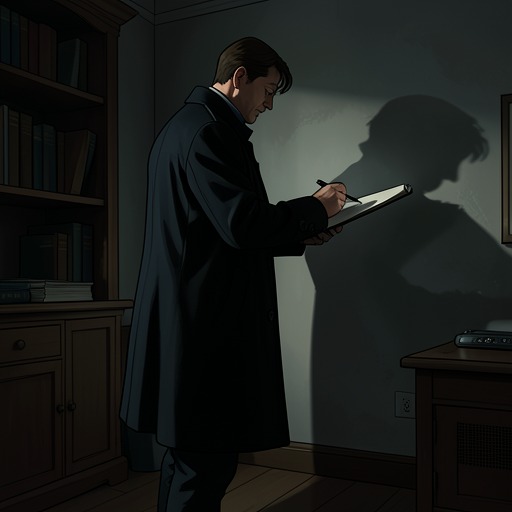
The Dark HalfThad Beaumont publicly reveals George Stark's true identity when he and Liz Beaumont disclose that the bestselling crime novelist was Thad writing under a separate name. The announcement ends a long, lucrative concealment and gives Thad a way to abandon a persona he had come to see as exhausted. It also turns his choice into a national media story, with consequences for his books, his public image, and the murder investigation surrounding the disclosure.
Background: Two Literary Identities
Thad was already a recognized literary writer: his first novel, The Sudden Dancers, had been nominated for the National Book Award in 1972. But the attention and money belonged largely to George Stark, the name under which Thad had written a major bestseller and three successful follow-up novels. To readers of crime fiction, Stark seemed to be a separate, prolific author; to the publishing industry, the arrangement depended on keeping Thad’s authorship concealed.
The two names represented more than different covers. Thad had adopted a pseudonym while struggling with writer’s block, believing that an identity separate from his own might let him write again. In discussing the choice, he connected “George Stark” to Donald E. Westlake’s Richard Stark books, whose protagonist Parker is a professional thief with a narrow, relentless purpose. Thad saw a parallel between that stripped-down criminal character and Alexis Machine, the central figure in the Stark novels. The allusion helps explain the hard-edged commercial identity Thad had built, but it does not make that identity a different writer: the books, and the author behind them, were one and the same.
The Secret Becomes Public
The pseudonym’s first major success was Machine’s Way, published by Darwin Press in June 1976. It reached number one on bestseller lists and became a hit film. Thad later described waiting for someone to discover that he was Stark. The secret was shared within a limited circle: his agent knew, as did people at Darwin Press, and the practicalities of the arrangement could not be entirely separated from Thad’s real identity. Yet he and Liz waited about a year and a half for the deception to be exposed, and no one did.
The silence lasted for years. George Stark published three further novels, none matching the extraordinary success of Machine’s Way but each making a strong showing on bestseller lists. The arrangement brought Thad money and freedom: he called the income his “f—you money,” because it meant he could leave teaching if he wished while continuing to pay the mortgage. Its success also kept the concealed identity in circulation, supported by the publisher, the agent, and readers who believed Stark was a separate man.
The pressure to reveal the truth came from Frederick Clawson, a law student and bookstore clerk who was both a devoted Stark reader and familiar with Thad’s own books. Clawson investigated the connection, contacted Darwin Press, and eventually sent Thad and Liz a letter and photographs that they recognized as an attempt at blackmail. Thad had already wanted to end the arrangement. Stark was running out of things to say, while Thad had begun a serious new book of his own, The Golden Dog. As Liz recounted it, the couple discussed Clawson’s material at length; after the initial anger, they saw the threat as hastening a decision that was already taking shape.
Disclosure and Its Immediate Consequences
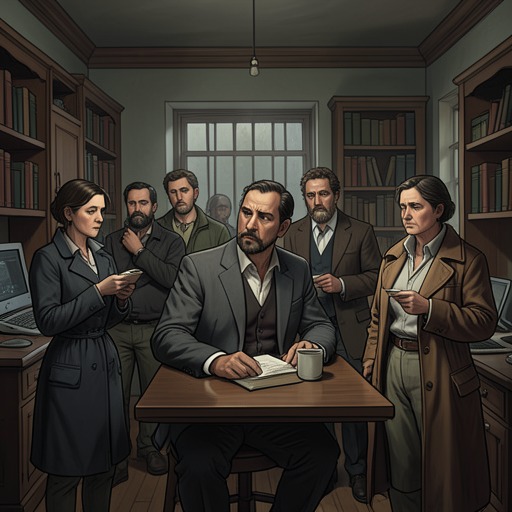
Thad and Liz decided to go public rather than submit to Clawson’s demands. They first gave the story to Jerry Harkavay of the Associated Press in Maine and to Publishers Weekly. The account then circulated nationally, and People magazine approached them. Their disclosure did not include everything Thad knew or wanted to say: he was determined not to make Clawson the center of the story. As Thad put it to Liz and his agent, Clawson was not the story but the person forcing them to tell it.
Clawson sent one more angry letter, complaining that Thad and Liz had treated him unfairly and asserting that he had done the work while Thad had merely written the books. After that, he stopped communicating with them. His complaint laid bare the conflict behind the blackmail: he wanted recognition in a story whose central fact was that Stark’s work had been Thad’s all along. Thad’s public admission made Clawson’s secret useless as leverage, though it did not resolve the violence that followed. When Alan Pangborn discussed the disclosure in relation to the killings, Thad acknowledged that its timing could make him appear to have a motive for killing Clawson, while arguing that killing a blackmailer after revealing the secret would make little sense.
The disclosure also had immediate commercial effects. Thad feared his agent, Rick Cowley, might resist ending a pseudonym that earned the agency substantially more than Thad’s work under his own name. Instead, Rick supported the decision and recognized that publicity could benefit both the Stark backlist and Thad’s books. The People story did help sales: Riding to Babylon had a chance of returning to the bestseller list, sales of the Stark novels rose, and Dutton planned to bring The Sudden Dancers and Purple Haze back into print. The exposure ended the secret without ending the market value attached to it.
Return, Motive, and Narrative Irony
For Thad, public disclosure was a practical defense against the temptation to write another Stark novel for money. He described the persona as a paper creation that he had enjoyed, but he wanted to write his own books again and believed Stark had reached the end of his material. Going public was his way of making the profitable option harder to resume. The decision thus joined a professional change to a personal one: Thad was not simply identifying the author behind a pseudonym; he was trying to recover room for the work he wanted to write.
The episode also complicates the story told by the media. The public version made a clean celebrity revelation out of a more tangled sequence involving a long-running publishing arrangement, Clawson’s investigation, and Thad and Liz’s prior wish to stop. Thad recognized the irony of criticizing People’s staged photographs while noticing that interview subjects, novelists especially, also arrange events to suit what audiences expect. Disclosure reveals the truth of Stark’s authorship, but the public presentation remains a constructed story. That distinction matters in a novel where fiction crosses into reality: George Stark was not an independent person, yet the name had acquired its own readership, income, and apparent life in the world of publishing.